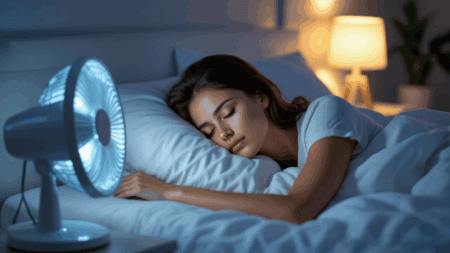
Hot, humid nights can make getting the rest you need hard—especially if you’re skipping the air conditioning. But don’t worry: whether you’re looking for tried-and-true solutions or fresh ideas, we’ve got practical ways to help you stay cool.
First, let’s examine briefly how your body regulates temperature while you sleep and why that matters.

How Temperature Affects Sleep
As evening falls and darkness sets in, your body produces melatonin—the hormone that signals it’s time to wind down. One of melatonin’s key roles is helping to lower your core body temperature, which naturally drops by about two degrees as you fall asleep and stays low throughout the night. This cooling is essential for deep, restorative rest. By morning, your body temperature gradually rises again, helping you wake up more easily.
But this cooling process can be disrupted when the room is too warm. If your core temperature doesn’t drop as it should, it can interfere with your sleep cycles, leading to tossing and turning and waking up less refreshed. Experts recommend keeping your bedroom between 60 and 67°F, with 65°F often cited as the sweet spot for optimal sleep.
Routines That Help You Sleep Better
To support restful sleep on warm nights, start by staying well-hydrated throughout the day—this helps regulate body temperature, and a glass of ice water on your nightstand can offer extra comfort. In the evening, aim to eat a light dinner and finish at least two hours before bedtime, which gives your core temperature time to begin its natural drop.
Gentle routines can also help signal your body to wind down: some people find a hot shower or bath about an hour before bed encourages cooling once they step out. At the same time, others prefer the immediate relief of a cool shower—try both to see what works best for you. Daily exercise supports better sleep overall, but avoid vigorous activity close to bedtime, as it can keep your body temperature elevated and make it harder to fall asleep. You’ll be better prepared for a cooler, more restful night by aligning your daily habits with your body’s natural rhythms.
Prepare Your Environment
Creating a sleep-friendly environment starts well before bedtime. During the day, keep curtains or shades closed to block direct sunlight and prevent heat from building up indoors. Consider closing windows as well, or use a fan facing outward to push warm air out. Once the sun sets and temperatures begin to drop, you can open multiple windows or doors to create a cross-breeze, using fans to keep air moving. If you have a ceiling fan, set it to spin counterclockwise to pull warm air upward and away from the sleeping area.
Minimize the use of lights and electronic devices in the evening, as both emit heat. Instead, rely on natural light during the day and use only essential lighting after dark. Your bedding also plays
a role in keeping cool—opt for mattresses, sheets, and pillows made from breathable natural materials like cotton or wool, and choose light colors, which tend to feel cooler. Similarly, lightweight, loose-fitting cotton sleepwear in pale shades can help your body stay comfortable as temperatures rise. Small adjustments like these can make a big difference in how well you sleep on hot nights.
Creating a sleep-friendly environment starts well before bedtime. During the day, keep curtains or shades closed to block direct sunlight and prevent heat from building up indoors. Consider closing windows as well, or use a fan facing outward to push warm air out. Once the sun sets and temperatures begin to drop, you can open multiple windows or doors to create a cross-breeze, using fans to keep air moving. If you have a ceiling fan, set it to spin counterclockwise to pull warm air upward and away from the sleeping area.
Minimize the use of lights and electronic devices in the evening, as both emit heat. Instead, rely on natural light during the day and use only essential lighting after dark. Your bedding also plays a role in keeping cool—opt for mattresses, sheets, and pillows made from breathable natural materials like cotton or wool, and choose light colors, which tend to feel cooler. Similarly, lightweight, loose-fitting cotton sleepwear in pale shades can help your body stay comfortable as temperatures rise. Small adjustments like these can make a big difference in how well you sleep on hot nights.
To stay cool through the night, a few simple tricks can go a long way. Start by sleeping as low to the ground as possible, since heat rises and cooler air tends to settle near the floor. Use fans strategically to circulate air, and try placing a shallow pan of ice in front of the fan to create a cooling breeze. Some people find relief by hanging a damp sheet in front of an open window to draw in cooler air.
For more targeted cooling, keep a spray bottle of ice water next to your bed for a quick mist when you feel warm. You can also freeze a hot water bottle and tuck it under your sheets or near your feet to help lower your body temperature. Slightly dampening a towel or t-shirt and freezing it before bed can provide extra relief when applied to pulse points like the neck, wrists, or forehead. Flipping your pillow to the cooler side during the night can also make a noticeable difference. And if you have long hair, tying it up can help prevent added warmth around your neck and shoulders. These small adjustments can help you sleep more comfortably, even on the hottest nights